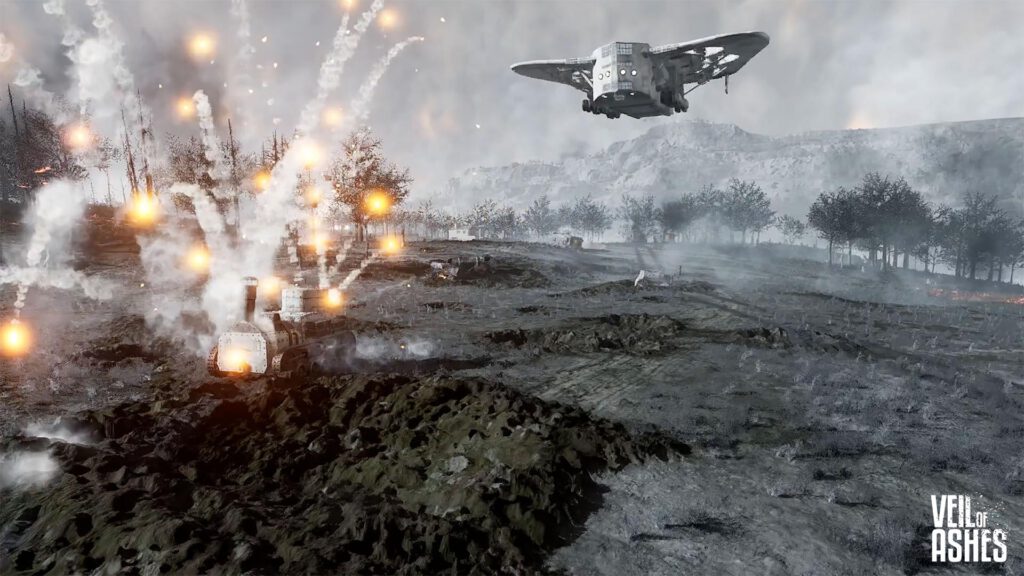
To accomplish the objective, you have a wide range of unit types at your command.
Infantry operate in squads and carry various weapons such as rifles and grenade launchers. Infantry are deadly at close range. Their greatest strength is their low visibility. On the open field, however, infantrymen are helpless.
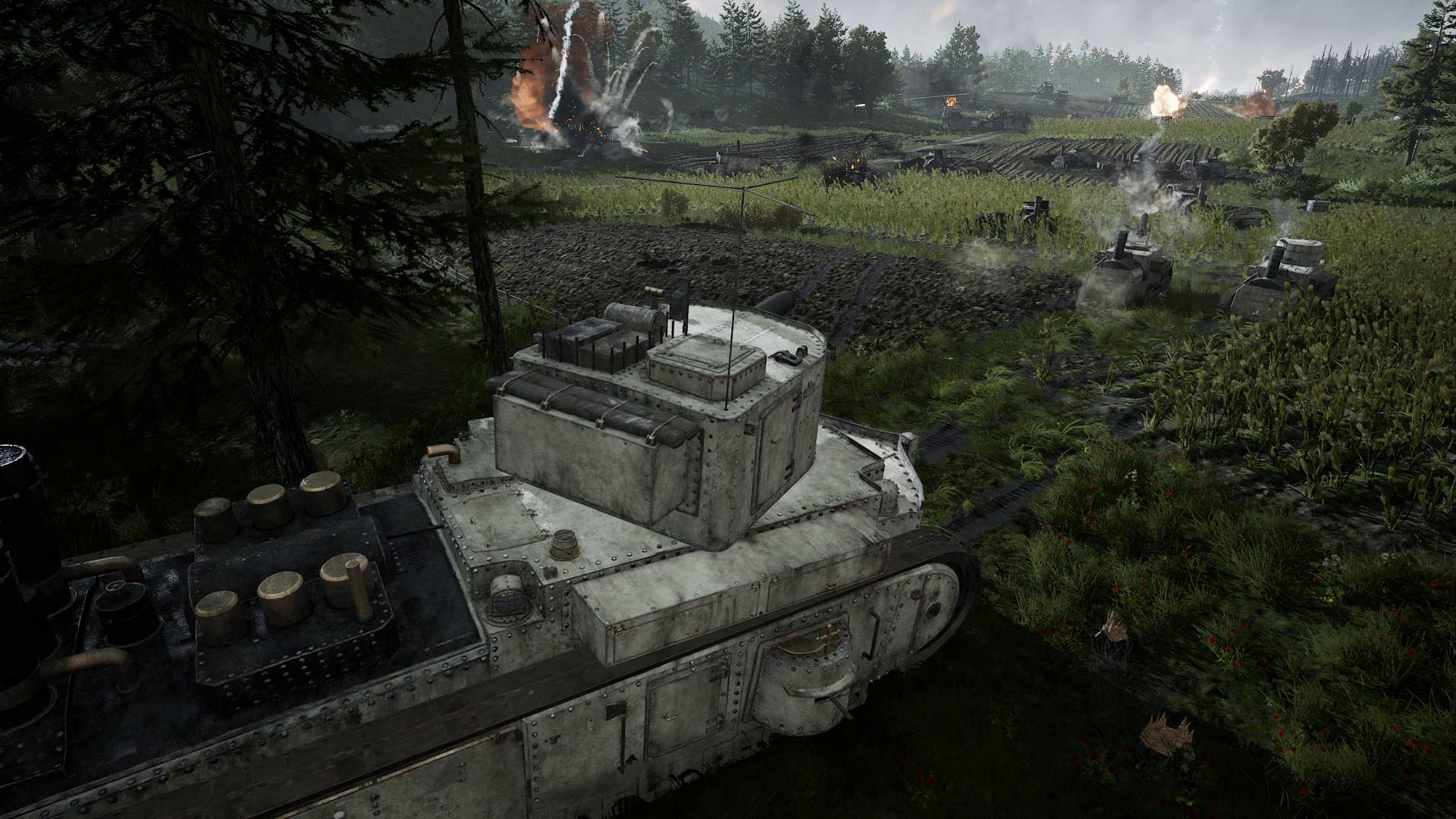
Vehicles are the allrounders in Veil of Ashes. Whether transporter or tank, reconnaissance or repair vehicle, the variety is huge. The vehicles feel most at home on open terrain and they are not able to drive into forests.
Behemoths are the most powerful and expensive units on the field, although there are weaker and stronger ones of their kind. Like vehicles, their purpose can vary. Unlike vehicles, however, behemoths are easy to spot due to their size.
Veil of Ashes follows a semi-realistic principle with its game mechanics. This means that the game should offer tactical depth when controlling the units, without becoming so realistic that only hardcore gamers will feel addressed. Veil of Ashes has the following mechanics:
The armour is based on a simple system. Either a projectile penetrates the armour and causes full damage or it does not. The probability of a projectile penetrating the armour depends on the target’s armour and the armour penetration value of the projectile. Units can have different strengths of armour depending on the side they are hit.
A hit on a vehicle does not only mean a deduction of HP. Condition effects are triggered with varying degrees of probability, for example the failure of the engine.
Players can request tactical support, for example in the form of observation airplanes that scout an area, or supporting fire from long-range artillery.
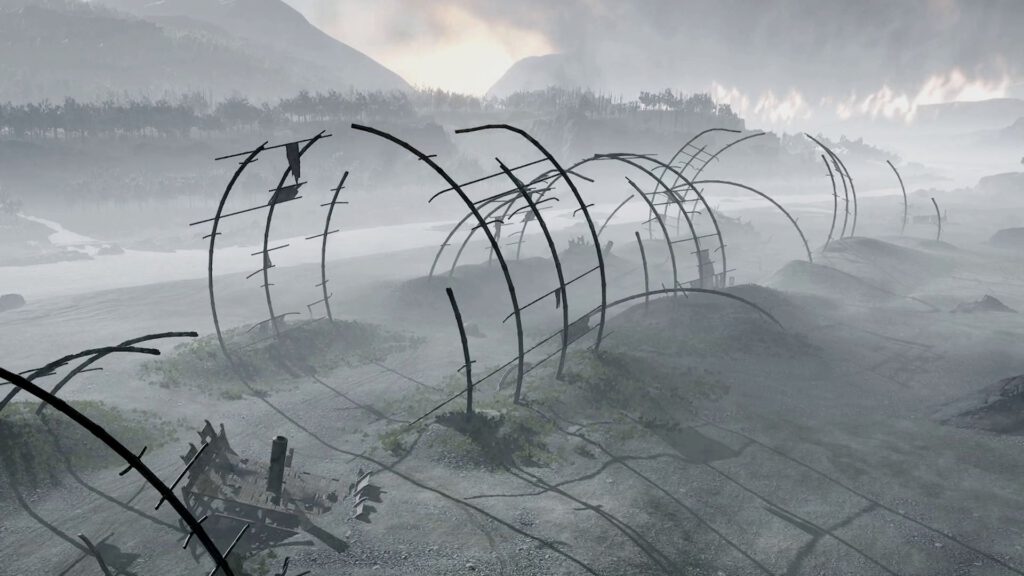
Buildings can be occupied and also destroyed. Trees are knocked over by vehicles and behemoths. Explosions create craters which can be used as natural cover. Your actions change the landscape over the course of the battle.
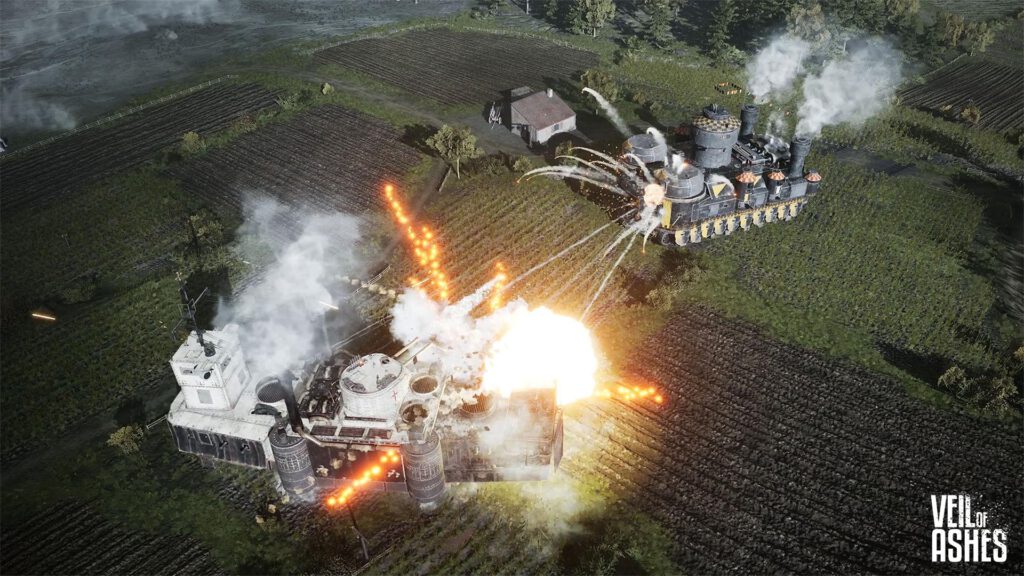
The resource system is based on two resources.
Cinium is the most important resource. You have the maximum amount of Cinium right from the start. Each unit costs Cinium, but requesting a unit only binds the Cinium to that unit. If the unit is destroyed, you get your resources back in rates. In this way, you are never without options and can always influence the battle!
The second resource are Tactical Points. You obtain this resource by destroying enemies, repairing allies and capturing strategic points. Reinforcement points are necessary for behemoths, but can also be used for tactical support like artillery strikes or reconnaissance aircrafts.